Ancient Egypt Lapbook for World History
This Ancient Egypt lapbook has twenty lapbook templates, eight hands-on activities, literature suggestions, research resources, and five bonus ideas for you to use when completing your study of Ancient World History and Egypt.

Not sure what a lapbook is? Find out here.
Ancient Egypt Lapbook Activity Overview:
- Pyramids: geography history science culture
- Hieroglyphics: history
- Mummies: history culture science
- Canopic jars: history culture
- Homes: history culture art
- Furniture: history culture research skills
- Clothes: history culture art
- Work: history culture research skills
- Food: history culture life skills
- Religion: history culture
- Entertainment: history culture
- What are these? history culture research skills
- Jews in Egypt: history Bible language arts
- Pharaohs: history
- Transportation: history science
- Egyptian math: history math
- Science in Ancient Egypt: history science
- Tools: history science
- Did you know?
- Show what you learned
Here are the resources used in the Ancient Egypt Lapbook:
Some links in this post may be affiliate links for products that I’m using or have tried in the past and recommend. This means that if you click on them, I may make a tiny commission, at no extra cost to you. For more info, check our privacy policy.
Required Library List
NOTE: Books on Open Library are free e-books. If you can’t find the exact books, you should be able to find some books on the same topics at your local library, and you can also search online with the suggested online resources.
Pyramid by DK Eyewitness
Mummies, Pyramids, and Pharaohs: A Book About Ancient Egypt by Gail Gibbons, Also on Open Library
Science in Ancient Egypt by Geraldine Woods Also on Open Library
Ancient Egyptians and Their Neighbors: An Activity Guide by Marian Broida Also on Hoopla and Open Library
Additional Research books for all ages:
You don’t have to have all of these books, just select a few that your kids will be interested in.
My Best Book of Mummies by Philip Steele or The Best Book of Mummies by Miranda Smith
Egypt: A to Z by Jeff Reynolds
The Story of the Nile by Anne Millard
Voices of Ancient Egypt by Kay Winters, Barry Moser
Daily Life in Ancient and Modern Cairo by Joan Barghusen
Encyclopedia of Ancient Egypt by Usborne Also on Open Library
Glorious Past: Ancient Egypt, Ethiopia, and Nubia (Milestones in Black American History) by Earnestine Jenkins Also on Open library
Ancient Egypt Revealed by Peter Chrisp
The Egyptian World (Kingfisher History Library) by Margaret Oliphant Also on Open Library
The Mystery of the Egyptian Mummy by Joyce Filer Also on Open Library
DK Eyewitness Books: Ancient Egypt: Explore the Nile Valley by George Hart
Add a Literature Book to your study (not required to complete the Lapbook, but just if you want to add to your study)
God King: A Story in the Days of King Hezekiah by Joanne Williamson
The Cat of Bubastes: A Tale of Ancient Egypt by G.A. Henty Also on Open Library
Tirzah by Lucille Travis
Casting the Gods Adrift: A Tale of Ancient Egypt by Geraldine McCaughrean Also on Open Library
The Golden Goblet by Eloise Jarvis McGraw Also on Open Library
Egyptian Princess by George Ebers Also on Hoopla and Open Library (best for high school)
Mara, Daughter of the Nile by Eloise Jarvis McGraw
Online Resources
King Tut and His Treasures for Kids video
King Tut for Kids Bedtime Stories podcast
The Great Sphinx of Giza for Children video
The Pyramids of Egypt and the Giza Plateau video
Egyptian Hieroglyphics Bedtime Stories podcast
How to Make Papyrus video
Ancient Egypt Power Point video (pause the video to read each slide)
What if you lived in Ancient Egypt? video (this isn’t a “children’s video”, but I didn’t see anything inappropriate in it.)
Daily Life in Ancient Egypt site
10 Inventions from Ancient Egypt article
Resources for Parents/Teachers
Food and Drink in Ancient Egypt article
Egyptian houses and furniture article
Popular board games in Ancient Egypt article (with game instructions!)
Egyptian History timeline graphic
If this is your first time completing a lapbook, read this first to learn how to fold your folders to create the lapbook base.
Directions for the Ancient Egypt Lapbook
There is a printable lapbook mini-book for each of the twenty activities in the Ancient Egypt Lapbook Pack in the HHO Shop. As you read through the books suggested in the Library List above, complete each lapbook mini-book following the directions below and on the printable pages.
There are also many corresponding hands-on activities. There are links and directions for these activities while some of the directions are in the books listed in the Resource List.
There are enough activities to keep you immersed in Ancient Egyptian history for several weeks.

Activity 1: Pyramids
Pyramids in Egypt Map booklet: Where are they located? Draw a map and put pyramid symbols to show the location and kind. See page 20 in Pyramid by Eyewitness books
Questions to answer
- What are the 3 types of pyramids found in Egypt?
- Why were the pyramids built?
- What materials were used to build the pyramids?
- How were the pyramids built?
- What kind of treasures can be found in the pyramids?
- Why did the Egyptians choose the pyramid design?
Hands-on: Make a simple step pyramid. Instructions can be found in Ancient Egyptians and Their Neighbors: An Activity Guide pg. 8, or make one out of LEGOS, or use these instructions to make one from marshmallows and toothpicks.
Activity 2: Hieroglyphics
Hieroglyphics often adorned the walls and artifacts in pyramids. In the printable booklet is a page with Cleopatra’s name written out in hieroglyphics. Write your name in hieroglyphics inside the mini-book using this site or this hieroglyphic typewriter.
Activity 3: Mummies
In the mini-book explain how mummies were made in Ancient Egypt. Why did they practice mummification?
Hands-on: Make a mummy: Over the years of homeschooling, we tried all of these mummy projects. Pick one that will work for your family: a Barbie or Action Figure (easy), an apple (also very easy and more realistic), an orange (my favorite because we removed the “guts”), a chicken (scroll to bottom of post for instructions–very gross but the most realistic)
Activity 4: Canopic Jars
Answer these questions: What were canopic jars used for? What did the different lids on them stand for?
Hands-on: Make a canopic jar. You’ll need an old jar with a lid (like a pickle jar), self hardening clay, and paints. Shape the clay into the shape of a jar. Set aside and let dry. While this is drying shape some more clay into the lid for your jar. Pick an image of a lid to copy. After both pieces are dry paint them to look like a canopic jar.
Activity 5: Egyptian Homes
Research and find out what kind of homes Ancient Egyptians lived in. Sketch some examples of the homes in your mini-book.
The most common building material in Egypt was mud from the Nile. Rich and poor people both had houses made from mud bricks, which were usually just dried in the sun (sometimes they were baked). Jewish slaves made bricks from mud and straw. Here’s how they made mud-bricks. If your kids love to play in the mud, let them try it.
Activity 6: Egyptian Furniture
Egyptians believed that items could be used in the afterlife, so they were often buried with some furniture. Identify the furniture the Egyptians uses from a museum display. (Hint: the chair on the front cover was only used by one gender; can you guess which one?)
Activity 7: Egyptian Clothes
Sketch or take a picture of your Egyptian outfit you make and put it in your minibook. (Or, if you didn’t make an outfit, just describe what a typical Egyptian would have worn.)
Hands-on: Make a girl’s long dress or a boy’s short kilt. Instructions found in Ancient Egyptians and Their Neighbors pp. 14-17 OR Make an Egyptian headband and collar using these directions.
Activity 8: Egyptian Work
What kind of work did they do? Write the different types of jobs in Ancient Egypt in your mini-book. Then pick one of those jobs to describe in detail in your book.
Activity 9: Egyptian Food
What was the Egyptians diet like? Was there a difference between poor and rich Egyptians diets? Make a list of each in your book.
Note: several sources mention that children and adults ate “beer” often, maybe even twice a day. This “beer” is not at all like the beer you are imagining; this was a sweet, thick soup made by fermenting barley grain with bread, that had a very low alcohol content, often with spices added.
Hands-on: Make overnight fig cakes. Instructions found in Ancient Egyptians and Their Neighbors pg. 37 OR try one of these recipes: Egyptian Okra, Hummus, or one of my family’s favorites (we eat this all the time in the summer!) Chicken Shawarma
Activity 10: Religion
What kind of religion did the Egyptians practice? List some of the different gods they worshiped and what each represented.
Activity 11: Egyptian Entertainment
What kind of things did the Egyptians do for fun? What were some of the most popular board games they played? Have you played any of them?
Hands-on: Play an Egyptian Game. If you have a mancala board, play a game. If not, try making your own Seega game with a 5×5 grid drawn on a piece of paper.
Activity 12: Jewish Peoples in Egypt
What role did the Jewish people play in Egyptian history? Find the Bible verses that tell about the captivity of Jews in Egypt. (hint: look in the book of Exodus) Why did the Jewish people become slaves in Egypt? What hardships did they endure during their captivity? What things did God do to make the Egyptians free the Israelites? If they had not suffered at the hand of the Egyptians, do you think they would have been willing to leave Egypt for the Promised Land?
Activity 13: Pharaohs
What was the role of pharaohs in Egypt? What did the pharaohs believe themselves to be? Who are some of the most famous pharaohs?
Hands-on: Make an Egyptian Pharaoh Mask Use the printable in the lapbook product (you may need to print it as a “poster” on 4 pages and tape together before coloring.
Activity 14: Transportation
List the ways Egyptians traveled. What were some of the dangers they faced when traveling?
Hands-on: Make an Egyptian sailboat. Instructions found in Ancient Egyptians and Their Neighbors pg. 32-33
Activity 15: Egyptian Math
The ancient Egyptian number system was composed of 7 symbols – a single stroke mark, a heel bone (upside-down smile), a coil of rope, a lotus plant, a finger, a frog, and a kneeling god.
With these 7 symbols, the clever Egyptians could add, subtract, multiple, and divide and count into the many millions! They even created a system of algebra, which helped them build the pyramids.
Inside the mini-book, make a chart to show the symbols Egyptians used for numbers and math. Explain how the Egyptians used math and what they used it for. You can find this information in Science in Ancient Egypt, or use this site to help you.
Activity 16: Science in Ancient Egypt
Research and write about how the Egyptians used science in building the pyramids, timekeeping, furniture, paper and ink, and medicine. What did we gain from the Egyptians?
Activity 17: Egyptian Tools
There are images of tools used in Ancient Egypt on the printable pages. Explain what these tools were used for: Archimedes Screw, bow and drill, wine press, flax comb, perfume spoon, and vases.
Activity 18: Rosetta stone
What is the Rosetta Stone and why is it important?
Activity 19: Did you know?
Come up with some facts to make a did you know book.
Here’s one – The Egyptians trained monkeys to climb fruit trees to pick the fruit at the top. See what other interesting facts you can come find.
Activity 20: Show What you Learned
Show what you learned – make a display of all the things you have created. Take pictures of your hands-on activities and add the pictures to your lapbook.
Use the Ancient Egypt Notebooking Pages (included in the Ancient Egypt Lapbook product) to write about some of your favorite topics you’ve studied.
Additional Ancient Egypt Activities
Create a Nile River Delta model with everyday materials.
Play Ancient Egypt Jeopardy trivia game online.
Make an Egyptian feast, dress in your Egyptian outfit, and invite some guests over to share your new information with.
Listen to Egyptian Treasures: Mummies and Myths by Jim Weiss Also on Hoopla
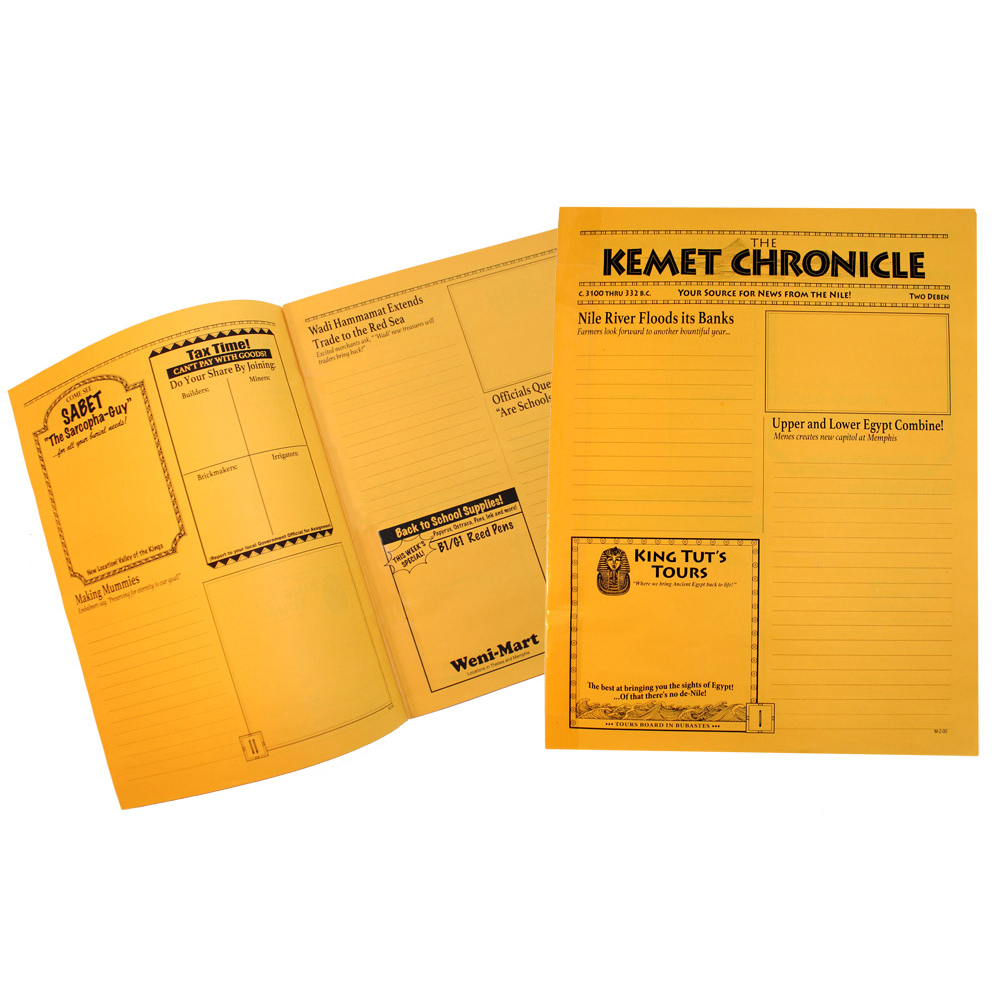
This Egyptian history creative writing newspaper from Homeschool in the Woods is a great way to wrap up everything your students have learned throughout the unit study.
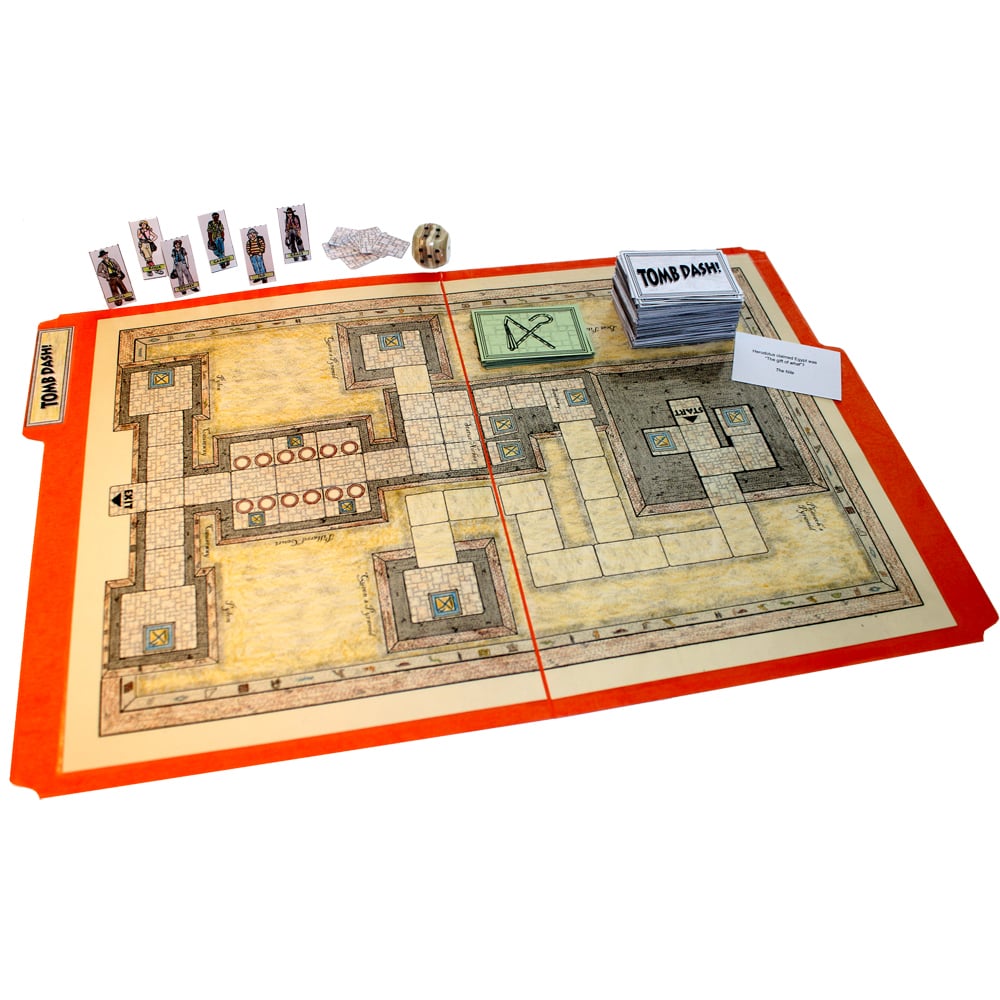
Reinforce what you are learning with this fun Tomb Dash! File Folder Game.
Download your copy of the OLD, ORIGINAL Ancient Egypt Lapbook from the Free Resource Library. Look under Lapbooks or GRAB THE NEW, COMPLETELY UPDATED VERSION FROM THE HHO SHOP with updated research resources and new printable pages (86 PAGES TOTAL!).


Don’t forget to pin this to your favorite Pinterest board so you can find it again later.
And be sure to follow Homeschool Helper Online on Pinterest for 1000s more free homeschooling resources!